About
About KINNOMEA hundred-year story that began with a single pot — the origins of Lamb Shabu KINNOME
STORY 01
Why the hot pot has always brought people together
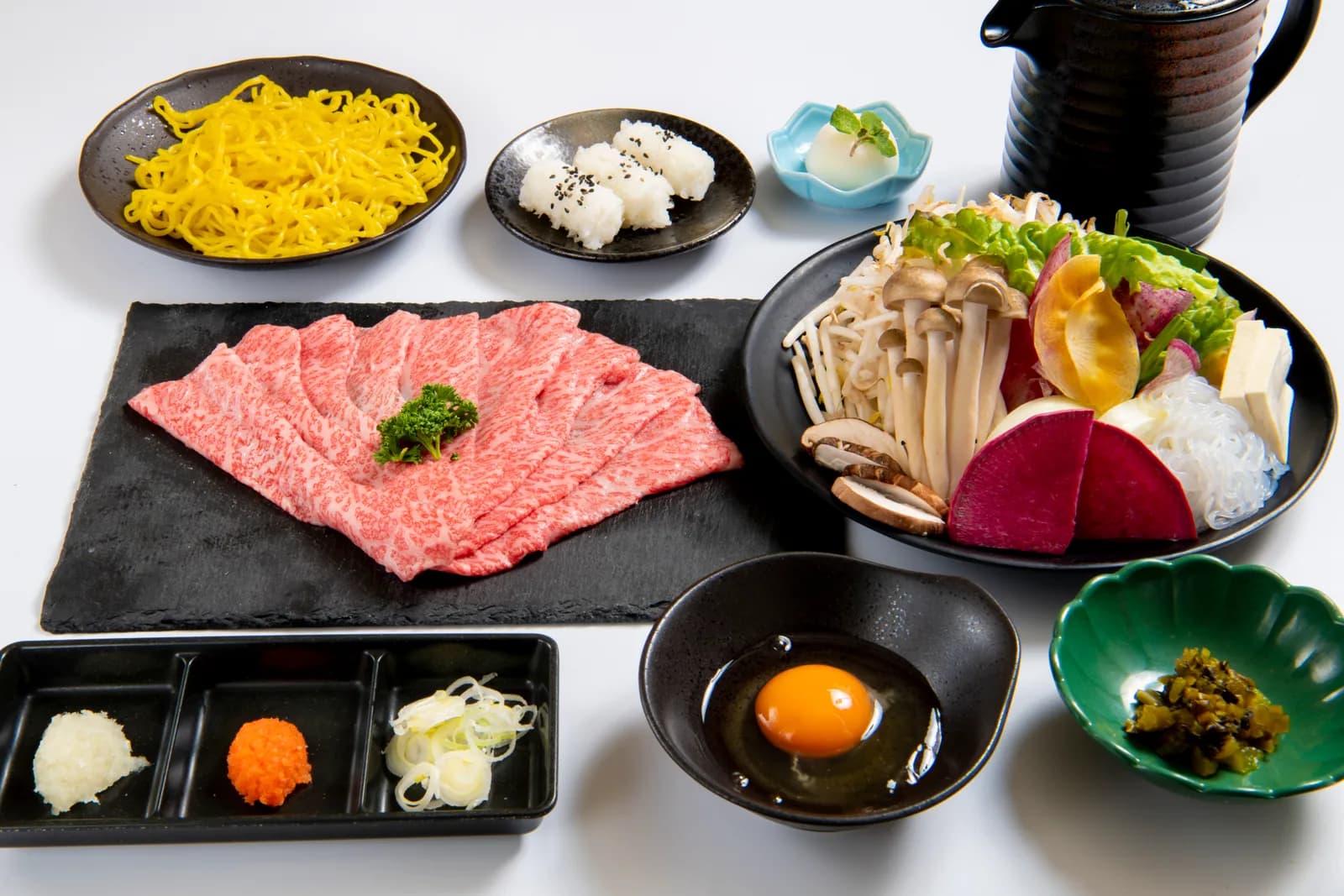
A hot pot is a curious dish. It only means something once someone sits down with you; light the flame, let the steam rise, and conversation follows. Even feelings that never find words can soften a little in front of the same pot. What Lamb Shabu KINNOME wants to offer is more than the act of eating. The warmth between people, and the glow that lingers once the meal is over — for us, that too is part of the flavour.
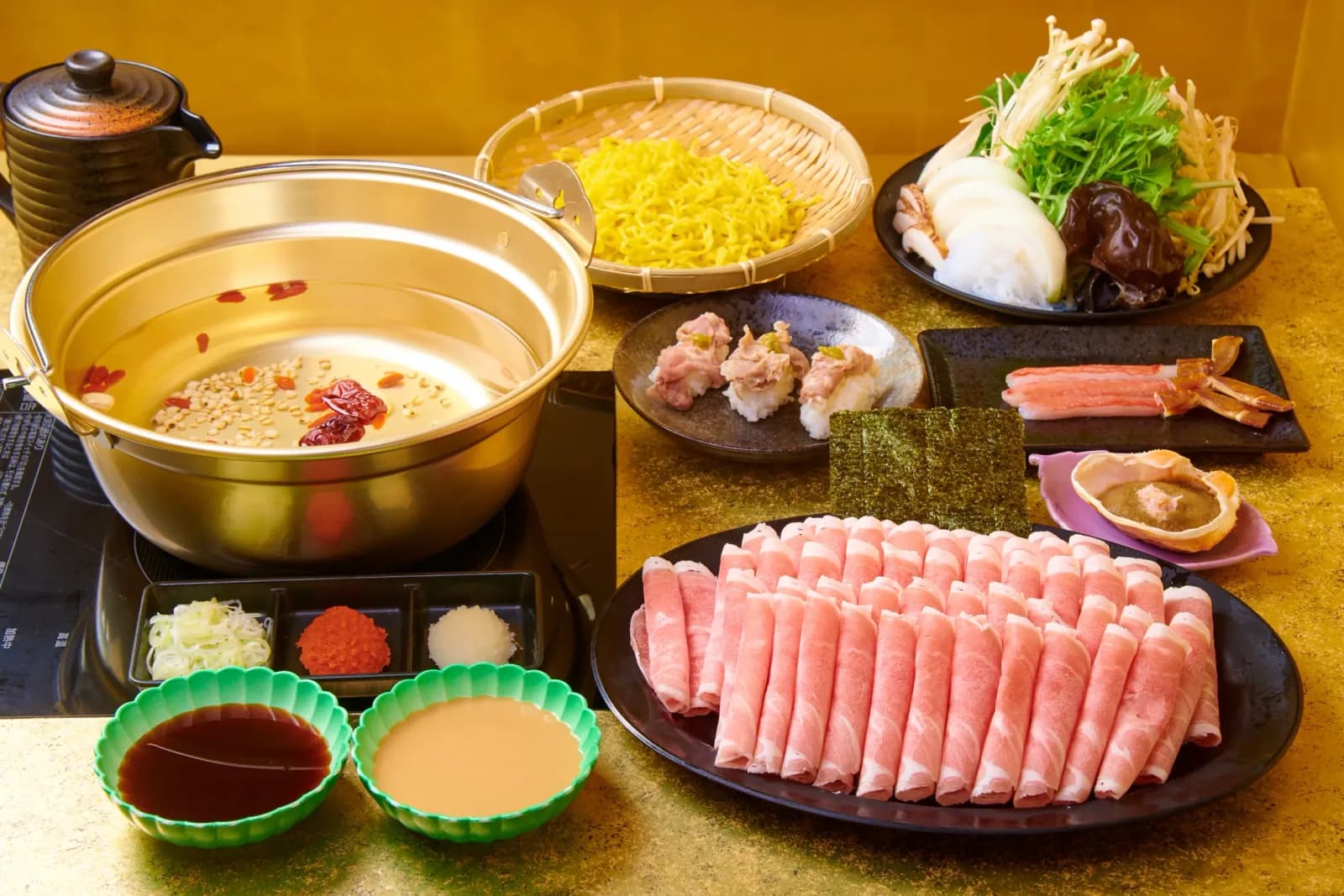
- Around one pot
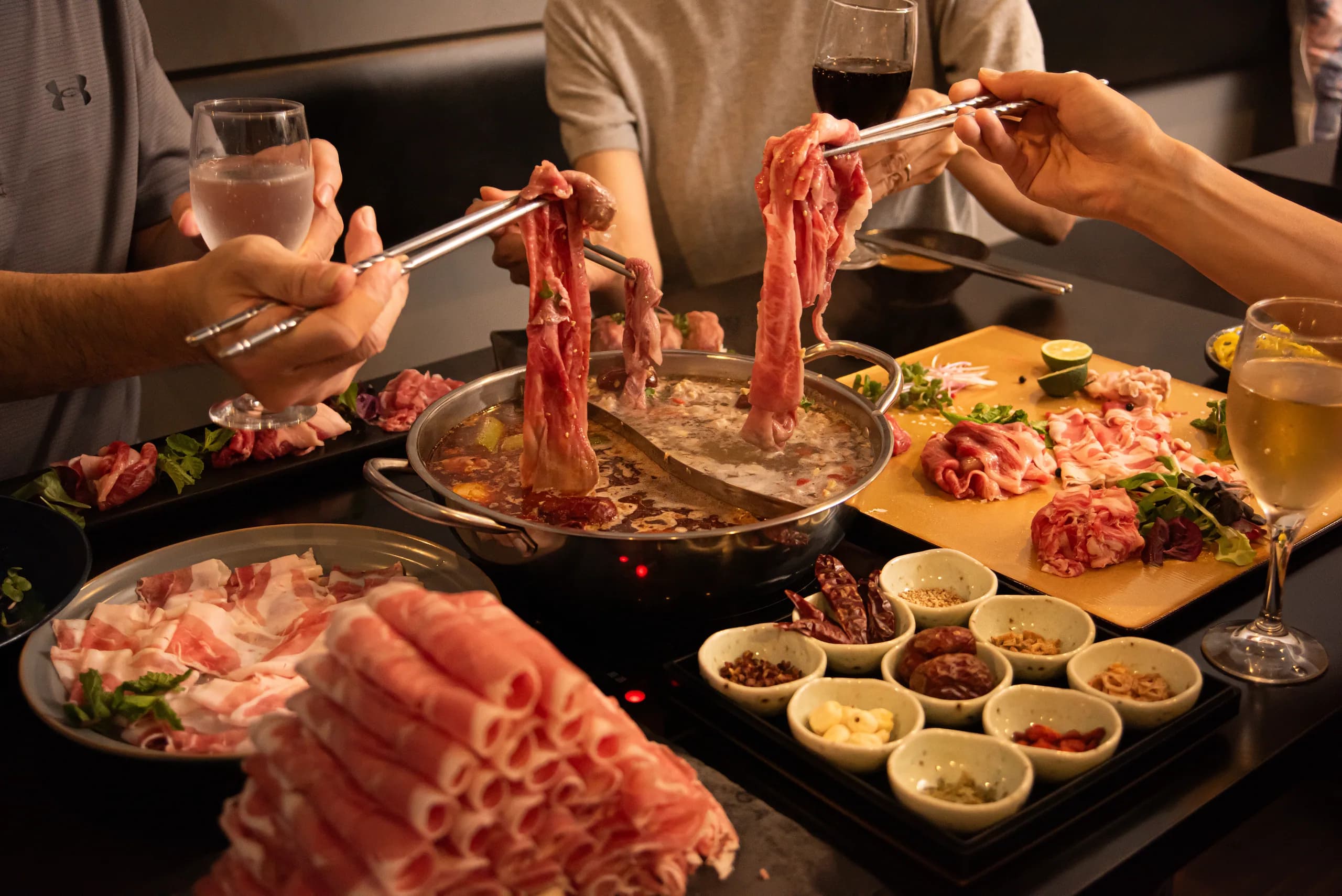
- The whole table
STORY 02
Where lamb shabu began | A fireworks factory in Asahikawa, 1923
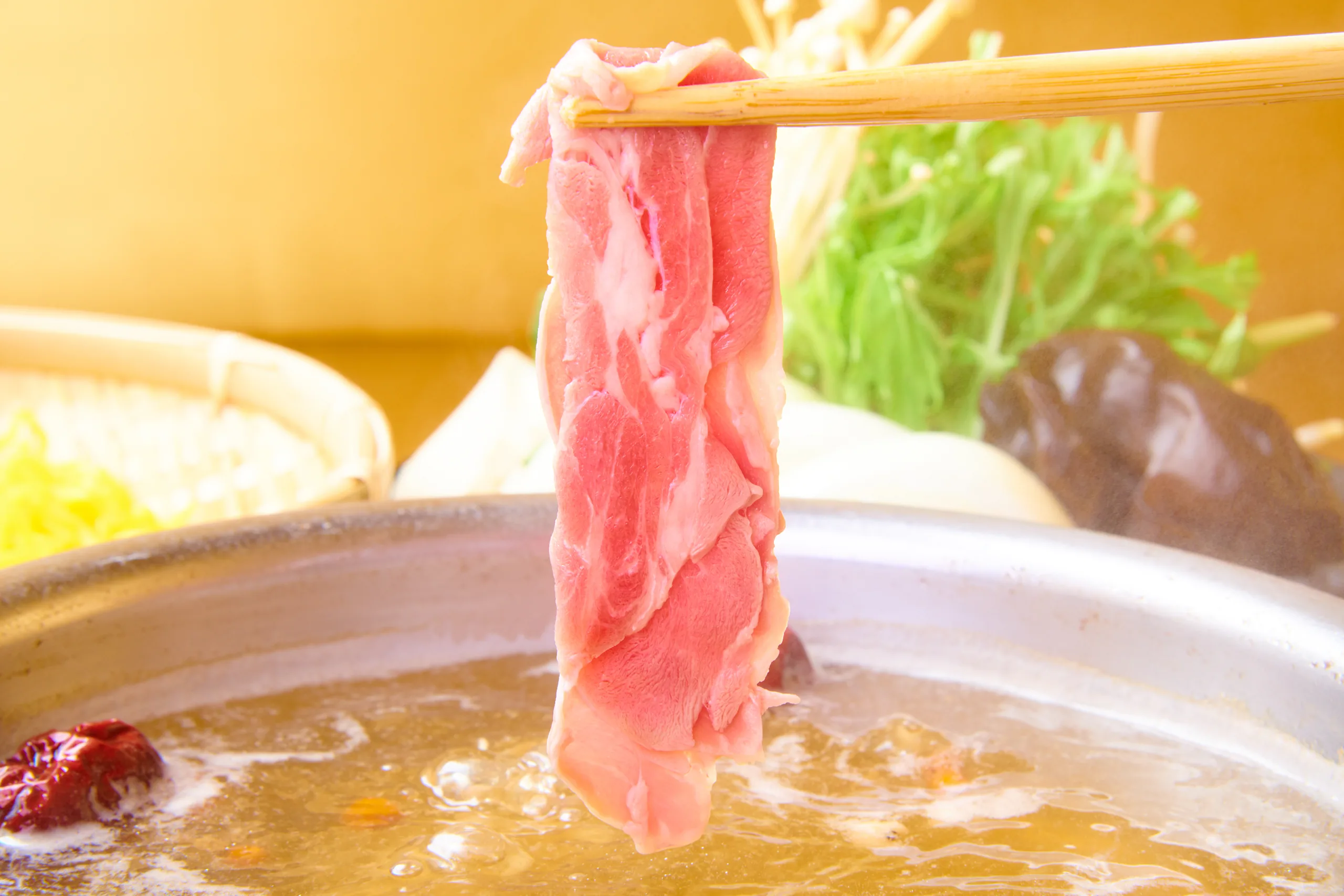
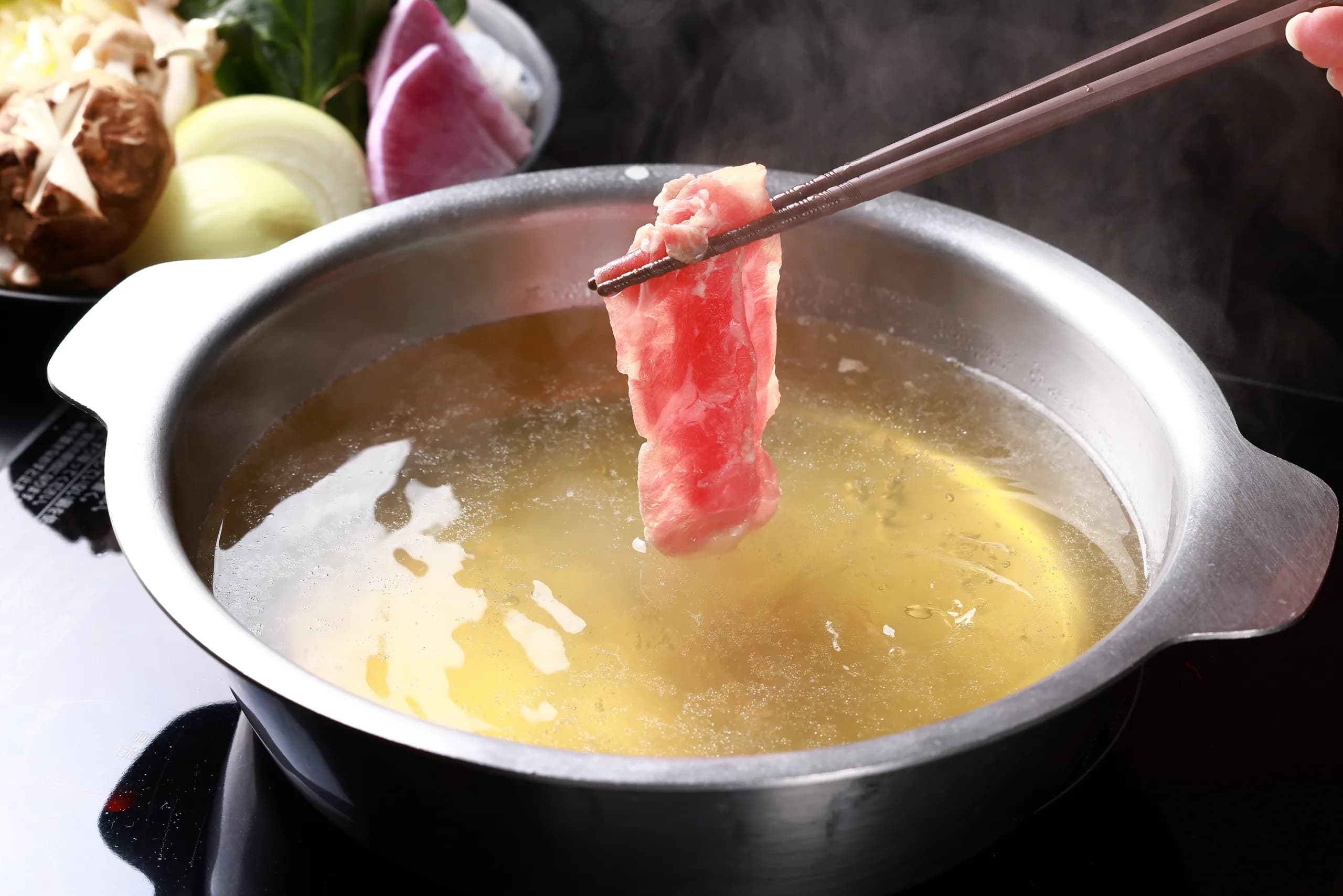
The story begins in 1923, at a fireworks factory in Asahikawa, Hokkaido. At the end of a day spent working alongside danger, what people needed was not a lavish banquet but a moment to reassure one another: “We made it through today as well.” What was served there was a hot pot — thinly sliced lamb swished briefly through simmering broth. That alone was enough for chilled bodies and tightened minds to unwind, little by little. Lamb shabu has been handed down ever since as a dish that quietly receives thanks for a hard day’s work.
- One slice through the broth
STORY 03
The value we have always cherished: continuing
Fireworks light up the night sky for an instant. A hot pot, by contrast, is a dish that continues through everyday life. Something you could eat every day. Something that never burdens the body. Something you would happily gather around again tomorrow. We have always valued continuity over spectacle. Not to be swayed by trends, but to be chosen naturally, again and again, as an option for an ordinary meal. We believe it is that accumulation which becomes the trust people place in a brand.
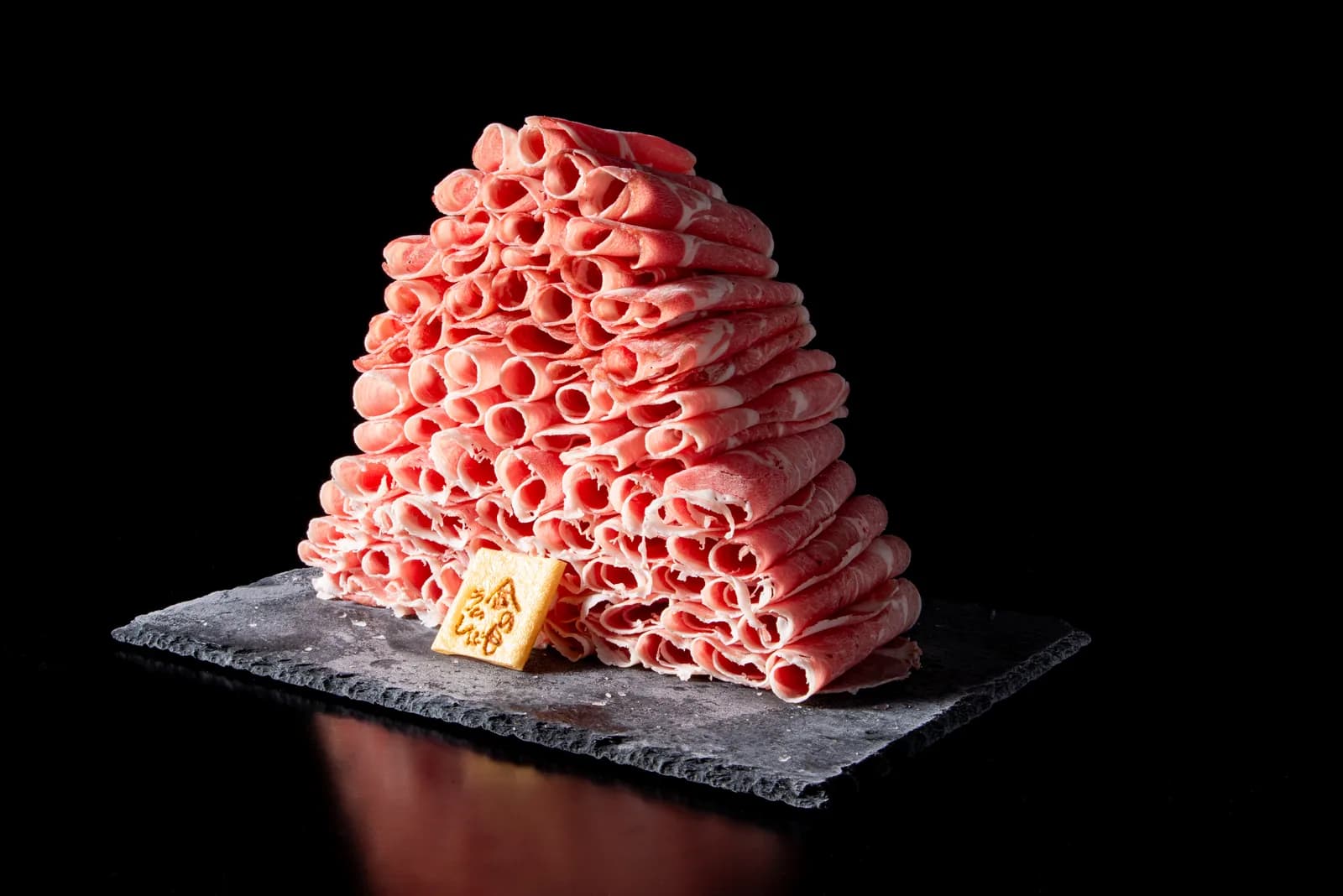
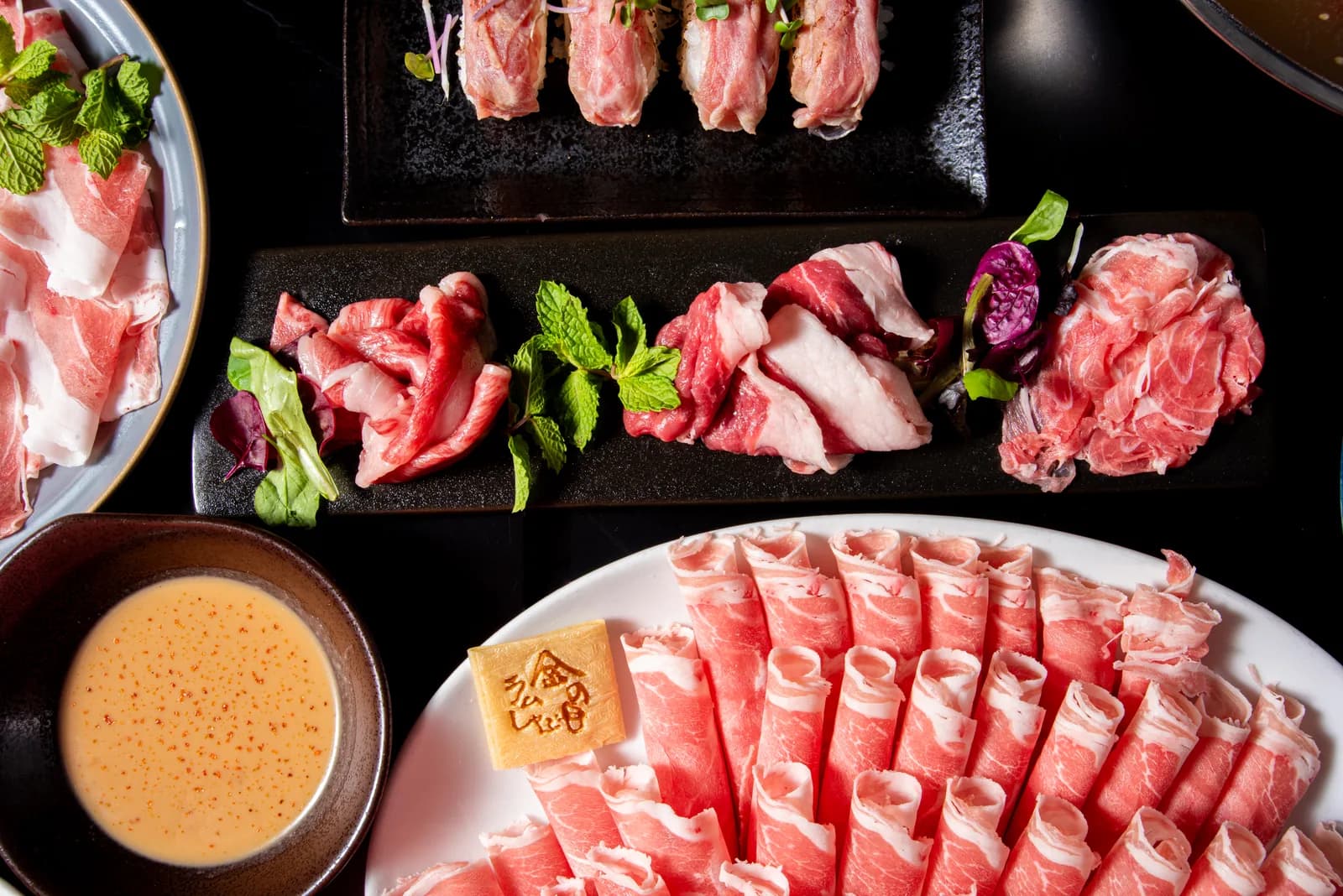
- Rolled lamb, fanned
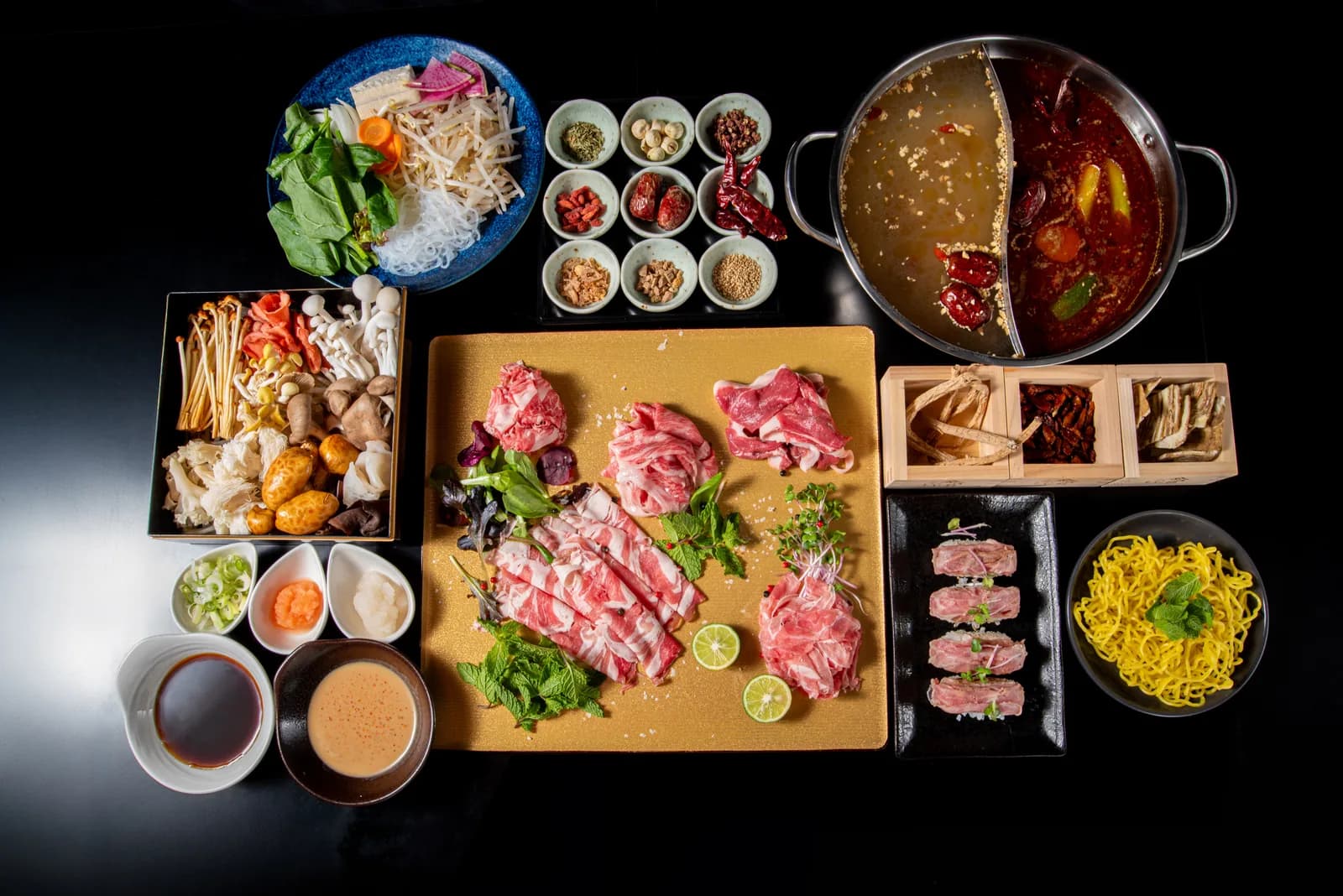
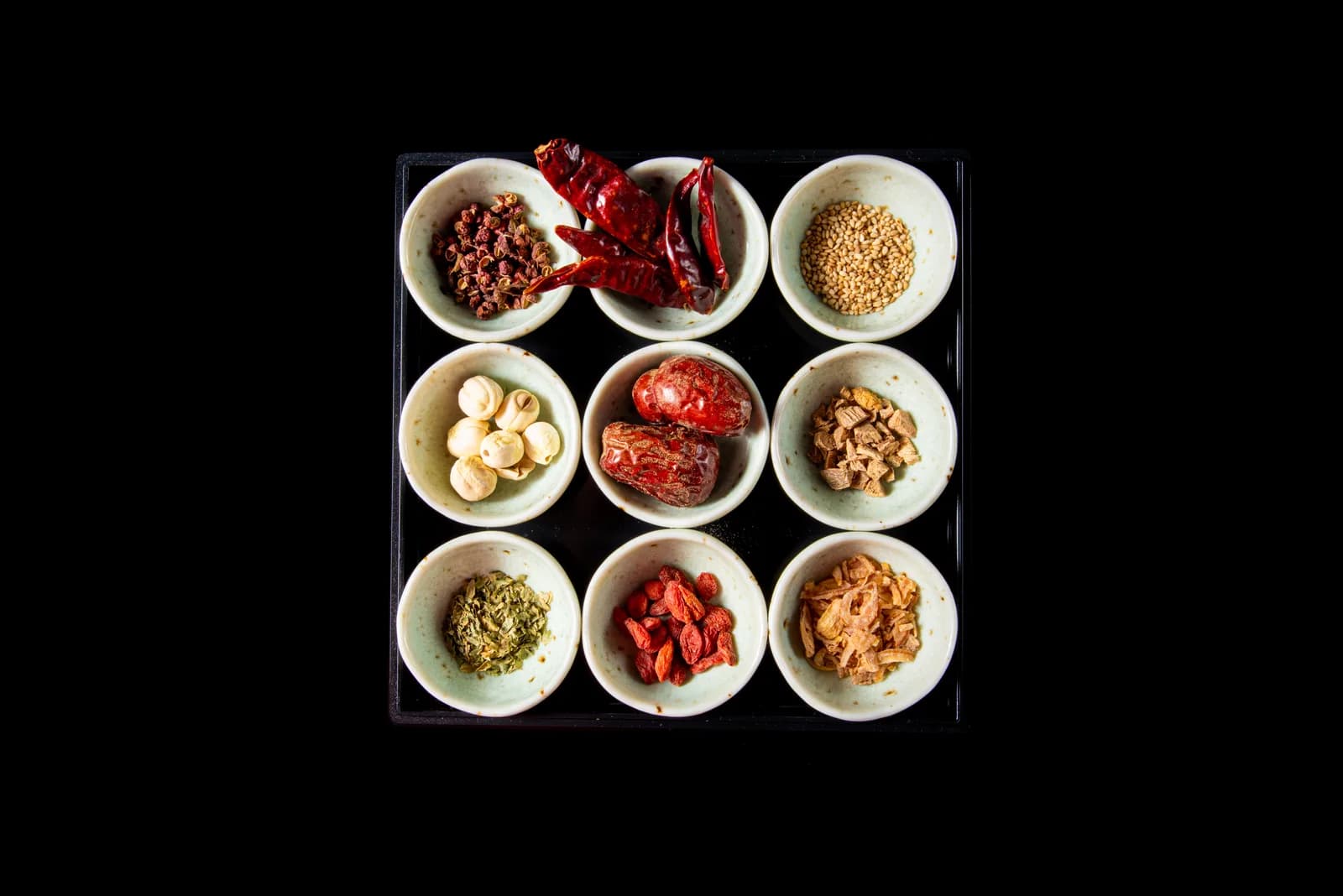
- Nine condiments
STORY 04
Stripping away, to reveal what lamb really tastes like
Lamb is not a dish of addition. The more you add, the more off-flavours tend to linger. That is precisely why we chose to strip things away. Excess fat, unwanted gaminess, heaviness — we carefully remove what is not needed and keep only the umami. It is much like making fireworks: add anything superfluous and they will not rise beautifully. Only by keeping the essence does a clear, transparent flavour emerge.
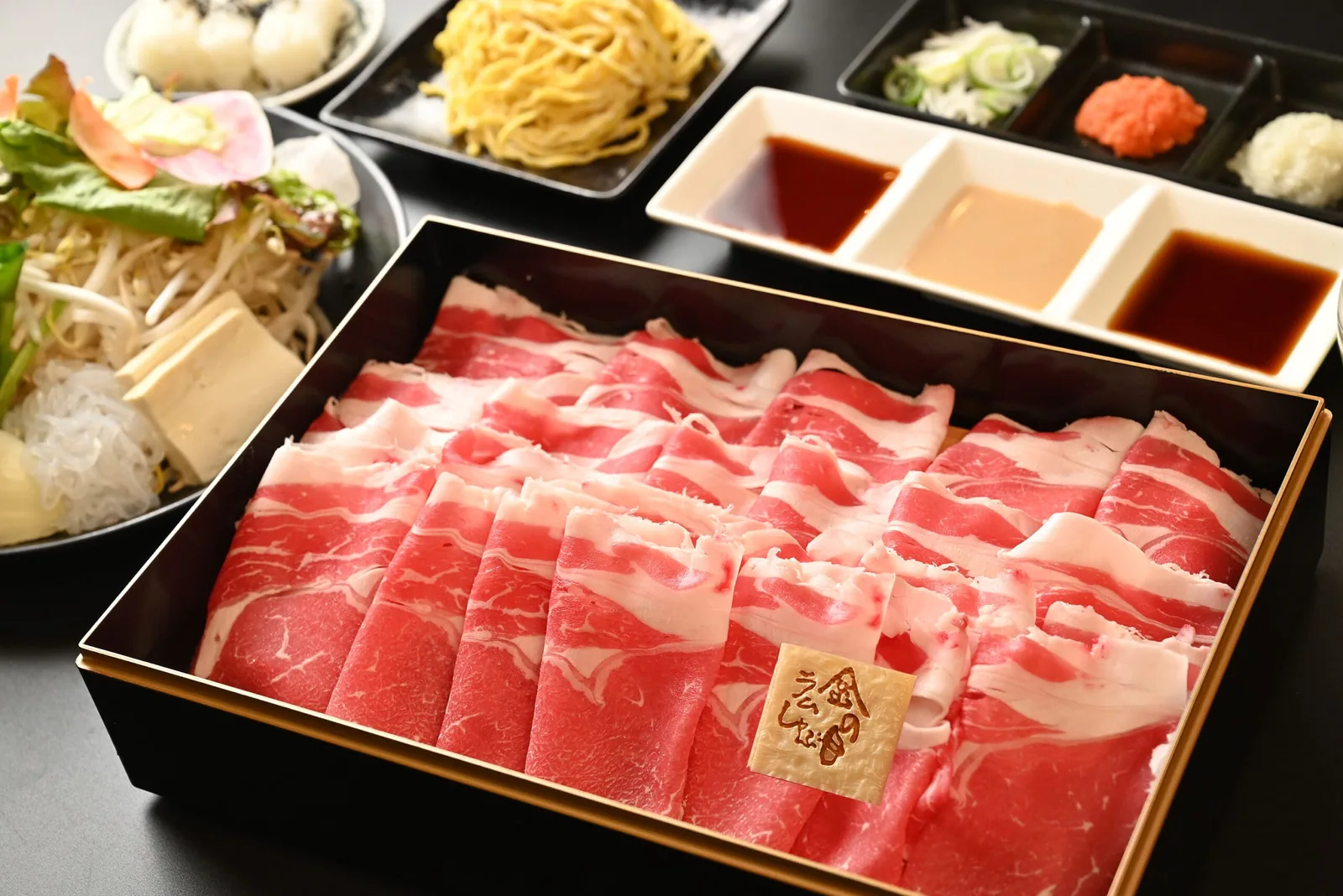
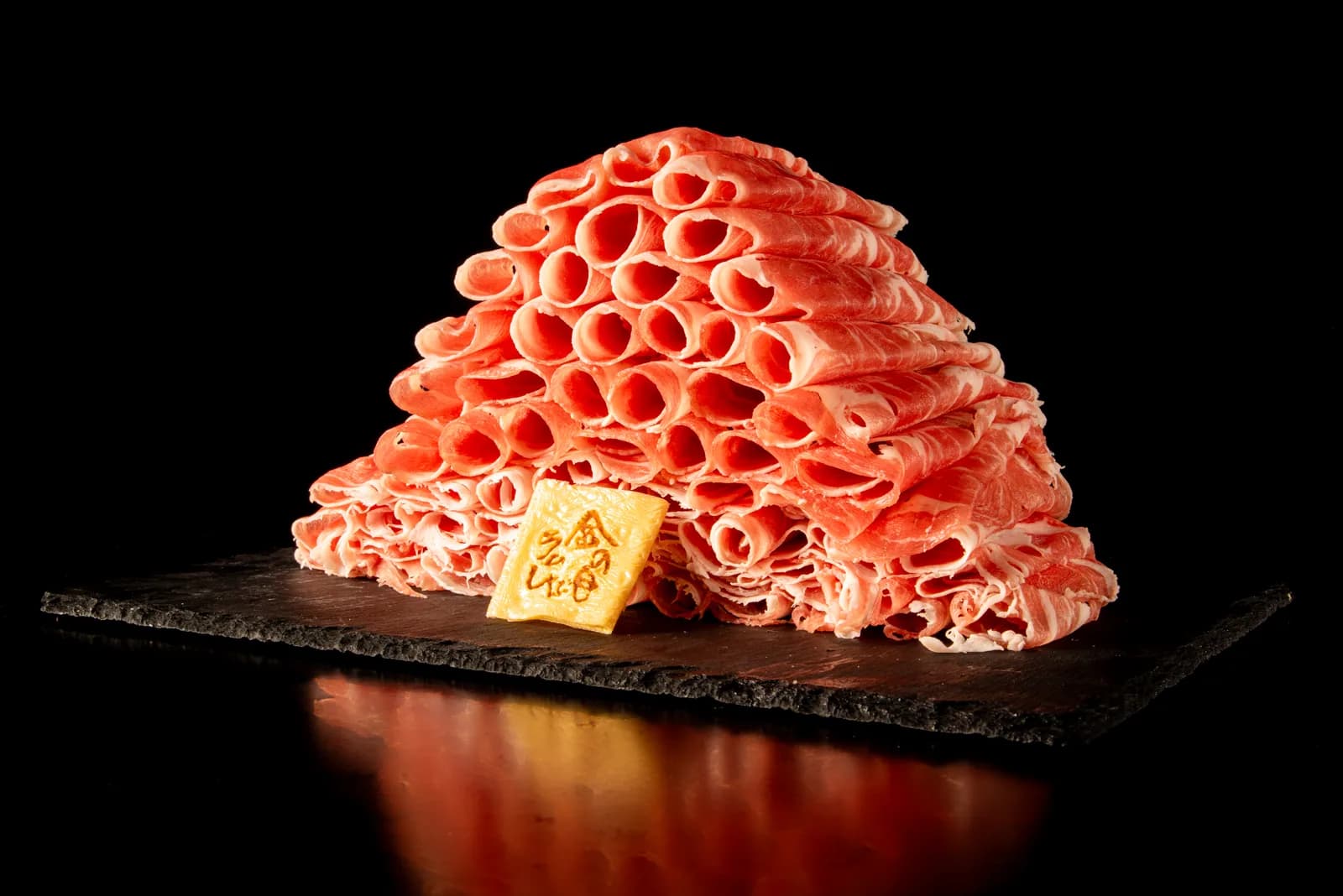
- Ginjo Lamb® in a lacquer box
STORY 05
The birth of Ginjo Lamb® | The one product that gives our philosophy a form
The form this philosophy took is “Ginjo Lamb®”, found only at KINNOME. Just as ginjo sake polishes the rice to strip away off-flavours, Ginjo Lamb® applies our own exacting standards at every stage: selection, handling, cutting and storage. We choose only lamb under one year old, sliced to less than one millimetre thick. The quantity we can serve is limited, but in return we can deliver the lamb’s own clear umami with nothing in the way. It is our answer to a simple aim: not “meat for a special occasion”, but quality you could enjoy every single day.
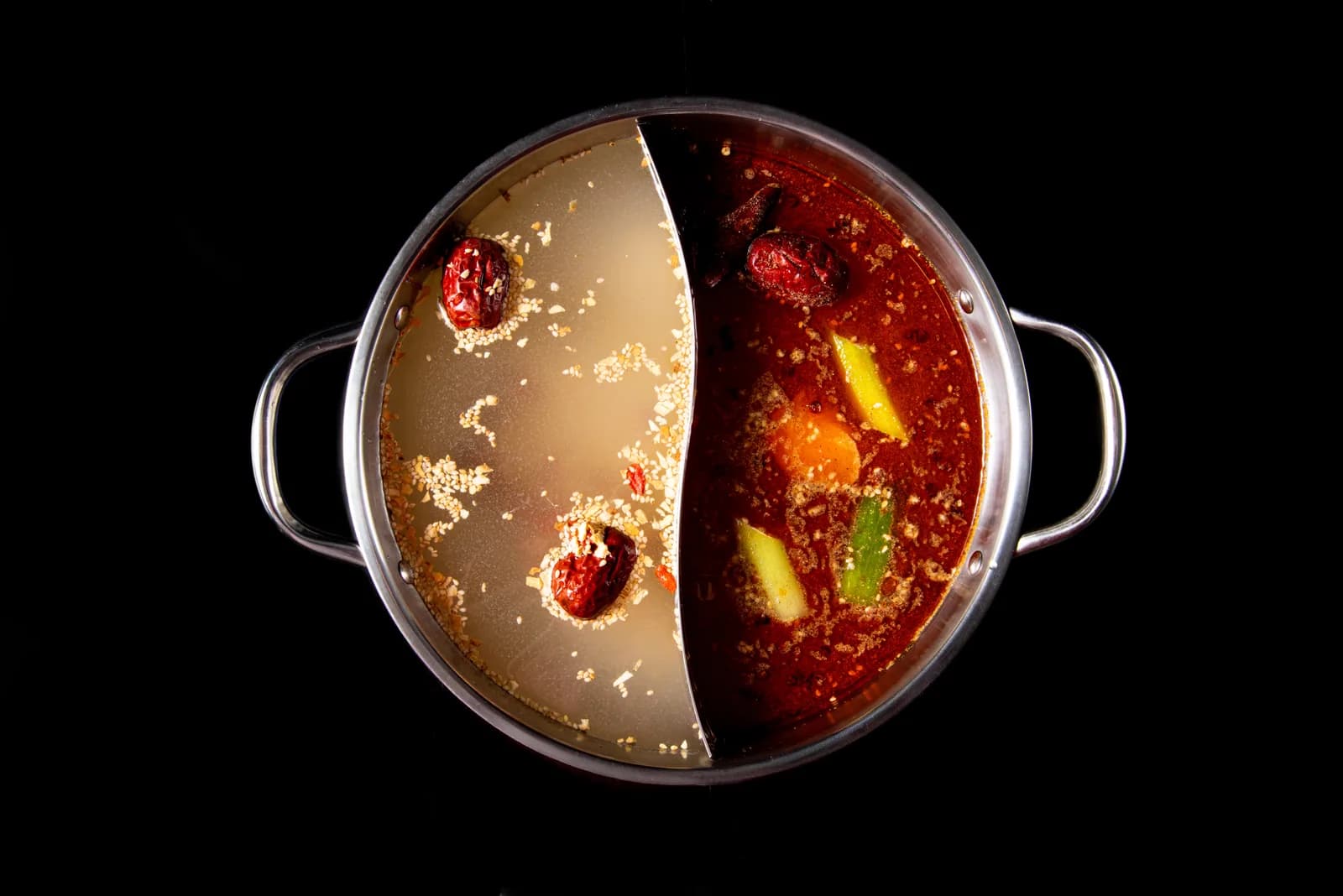
- The medicinal broth
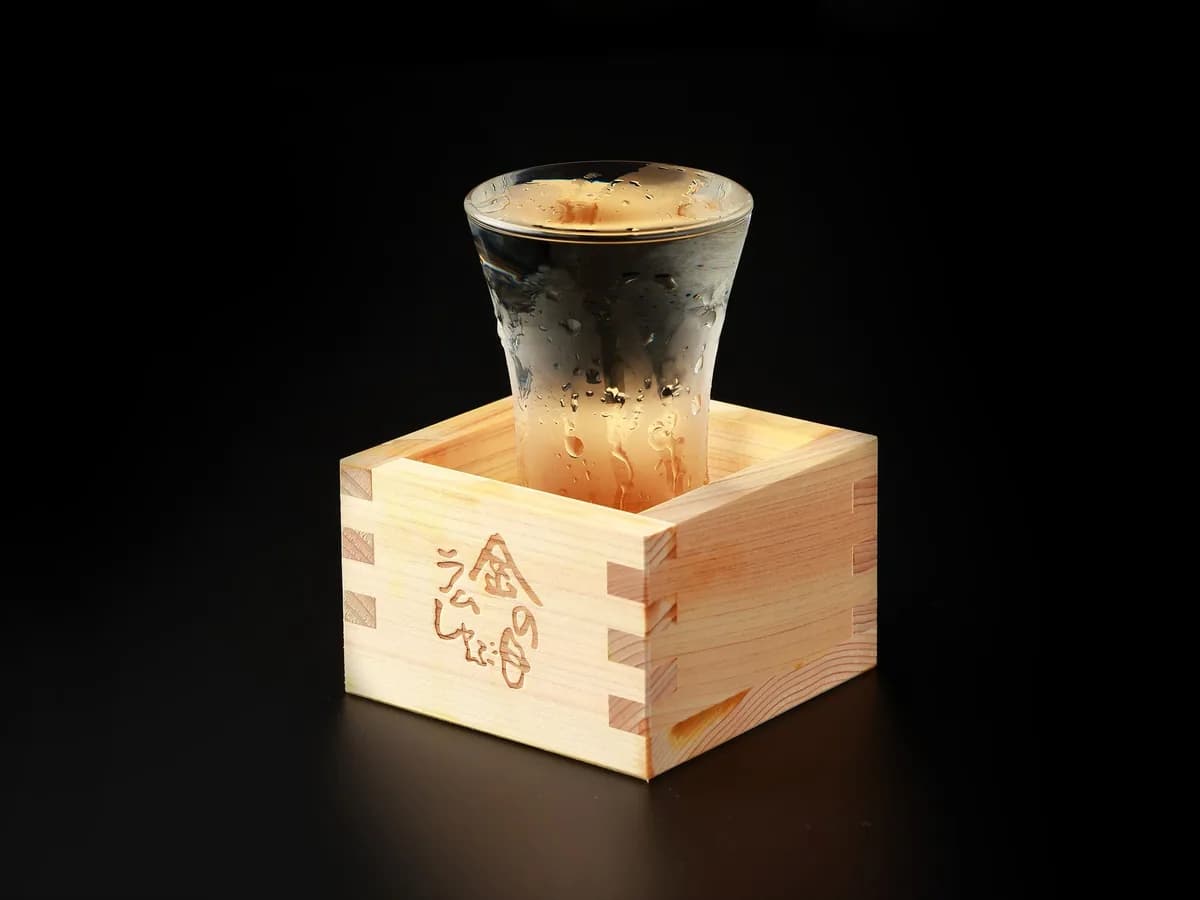
- Chilled sake in a masu
SAUCE
Our house-crafted sauce, cherished since day one
The other lead role in the taste of Lamb Shabu KINNOME is our house-crafted sauce. We have kept refining it with one thing in mind — how it meets the meat — so that Ginjo Lamb® tastes even better. Sweep the lamb through the pot, let the sauce coat it, bring it to your mouth. For a first-time guest and for someone who has been coming for years alike, we want that mouthful to be the one they come back for.
- The house-crafted sauce and its condiments
STORY 06
Toward the next hundred years | So that we can keep gathering around the pot
Times have changed, and so has the shape of how we eat. Yet the way people show appreciation to one another has not. To gather around a pot, eat the same food and share the same hours — that act is where we began. With a century of philosophy in hand, Lamb Shabu KINNOME sets out toward the next hundred years. The story that began with a single pot is one we will keep telling, carefully and honestly. To spread the deliciousness of lamb shabu across the world — that is our mission. From Ginza to the world. We want to become the brand that comes to mind, anywhere on earth, the moment someone says “lamb shabu”: KINNOME.
SUPERVISOR
We asked Dr. Kazunaga Yazawa about lamb
Dr. Kazunaga Yazawa (PhD in Agriculture), Head of the Health Food Science Division at the Comprehensive Research Organization, Waseda University Institute for Nano & Life Innovation, is a guest who visits Lamb Shabu KINNOME every month. Here is what he told us about lamb as an ingredient, together with his profile.
COMPANY
Company profile
- Company
- GOLDEN EYE SPARK Co., Ltd.
- Representative
- 鶴 洋輔
- Founded
- June 2000
- Head Office
- 東京都港区六本木4-12-11 竹岡ビル2F(2F Takeoka Bldg., 4-12-11 Roppongi, Minato-ku, Tokyo)
- Philosophy
- 1. To offer the highest form of hospitality — our customers’ satisfaction
- 2. To pursue deliciousness together with health and beauty
- 3. To create a new food culture for Japan
Cut chart
Lamb cutsFor shabu-shabu, the shoulder is our cut of choice.
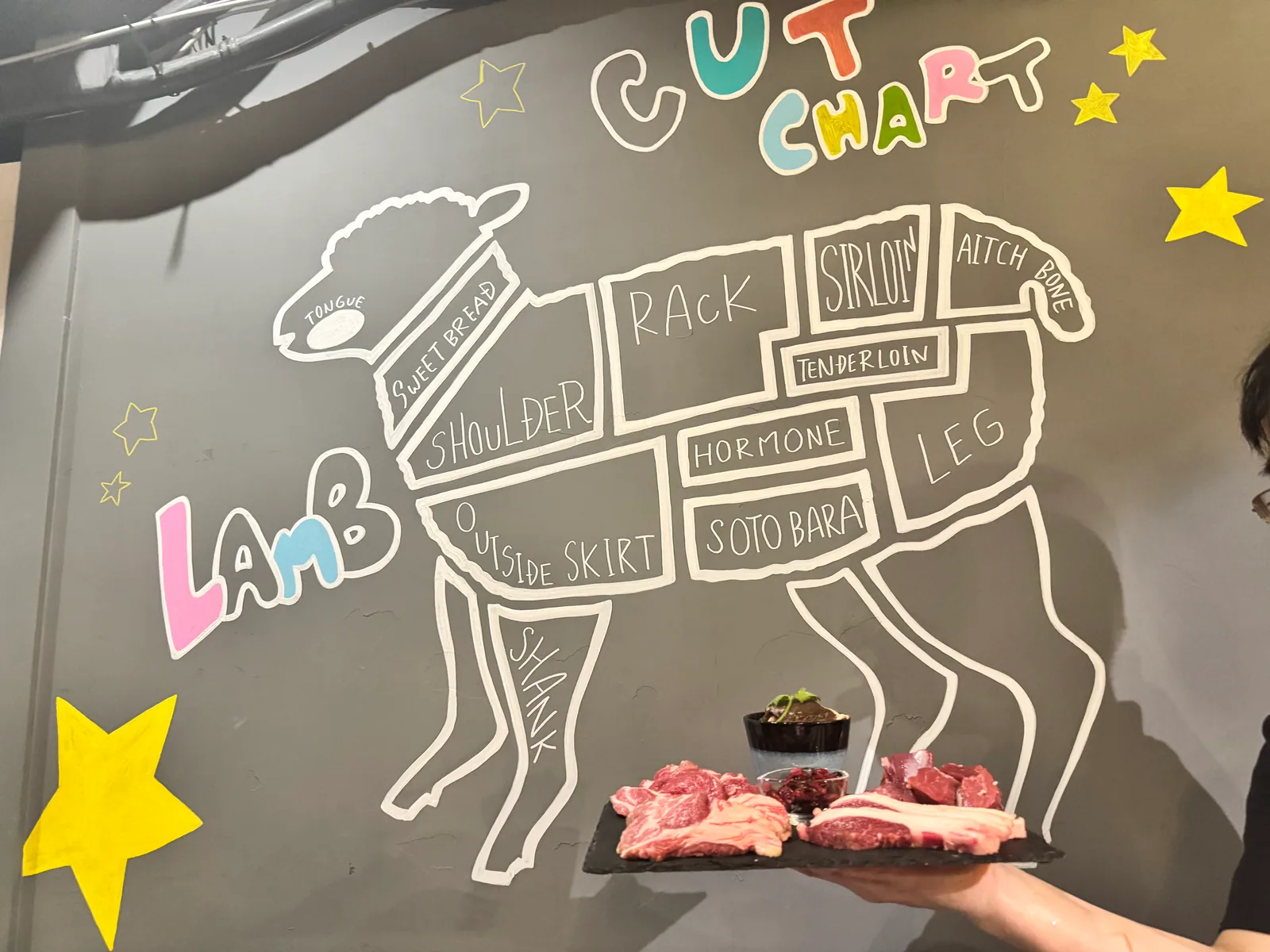
Lamb changes character from one cut to the next. The cut Lamb Shabu KINNOME uses for shabu-shabu is, as a rule, the shoulder — the tender, deeply flavoured cut we have long served as Ginjo Lamb®. On the wall of our Shibuya store there is a cut chart showing where each cut sits on the animal.
- Shoulder
- The cut we use for shabu-shabu. The tender, deeply flavoured shoulder KINNOME has long served as Ginjo Lamb®.
- Chuck roll
- The classic cut for Jingisukan. Lean meat and fat in good balance, growing richer as it grills.
- Rack
- Sweet fat and a deep lean flavour; grilling brings out its aroma.
- Fillet
- One of the most tender and rarest cuts of lamb. Refined, with little gaminess.
- Rump
- The cut at the top of the leg. Tender lean meat with a refined flavour and a firm, meaty bite.
- Heart
- The heart of the lamb. A springy bite and a clean, clear flavour.
- Leg
- The cut from the hind leg. Mostly lean and tender, it suits thick-cut steaks and roasts.
- Belly
- The cut from the ribs. One way to eat it is seasoned with spices and grilled until crisp.
- Shank
- The cut from the shin. Its character is a firm, springy bite.
- Offal
- The organ cuts. Rare parts such as tongue and liver are enjoyed grilled on skewers or stewed.